


Concrete Facts: The Down Low About Landscape Curbing

Creating a beautiful landscape is joyful! First, you figure out the flower color and textures and pick the perfect mulch to complement your beds. Then you add vertical elements like trees, shrubs, and boulders.
When you design your landscape, you get to visualize the final product, how it will mesh with your home and other structures, and how to get there. The creative process continues with plant installation. And it’s all fun until… the creepers.
The one thing that’s not fun about landscaping is seeing the lines between your gardens getting crossed by grass or weeds. Losing the crisp edges or winding curves you so lovingly created is not exactly a lift to your spirit.
Well, worry not! Wheaton’s got the rock-solid solution to all your edge-losing woes. Today, we’re laying down the facts on landscape curbing.
Rocky Road That Got You Here
We love edging! Edging creates a distinct border between your garden and the rest of your yard. A professional edge is something to behold and makes your flower bed stand out!
But an edge must be maintained. And while Wheaton’s customers get their edging taken care of during landscaping services, we’ve all had an edge fade at some point, maybe even to the point that you don’t remember where your garden used to start!
One edge that takes very little to manage is a concrete curb.
Solid Benefits to Landscape Curbing
Landscape curbing has multiple benefits to your yard. They save you time during maintenance, help to curb weed growth, and look great!
Stone Cold Foxy
Concrete curbing is distinctive. No other barrier has quite the same look. And you can adjust the shape and color to suit your particular preferences.
Like Hitting a Brick Wall: An Excellent Root Barrier
Concrete edging creates a root barrier that other forms of border don’t. While a dug-in edge can also look good, it doesn’t stop your garden’s roots from encroaching on other areas of your property or plants from encroaching on your garden.
(Not) Like a Rolling Stone
Because a concrete barrier is so solid and permanent, it reduces the time you will need to spend maintaining your edged lines. In other words, you get time back on your side.
Installing: Stepping Stones to Complete Concrete Curbing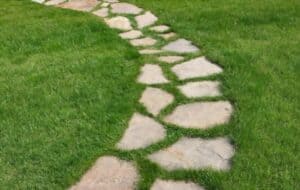
Like everything in life and landscaping, concrete curbing starts with a plan. We’ll begin by talking to you about what shape you would like your curb to have, its height, and what gardens you’d like to give curbing. We can also decide on the color of your new concrete border at this time.
Next, we’ll map it out in the yard. We’ll begin by preparing the ground by cutting away sod and leveling the ground around where you would like the curb to be placid.
Now it’s time to mix the concrete into a dry sand-like mixture. Finally, we’ll add any coloring and deliver it to your yard to be sent through a machine that will extrude your border the entire length of your garden.
We will then add any stamps or designs to your new border. After we touch it up, all this is left to do is let it dry and not touch it (unless, of course, you want to add in a hand or paw print to remember the day.)
You should wait forty-eight hours before working around your new curbing. After that, for several weeks, you should be cautious not to place anything on your new concrete as it has not fully set. Wheaton will give you the exact timeline at the time of installation.
Rock and Roll Glam, and Variety!
Though the word “curb” might make you think of a grey city sidewalk or the place you bring your trash for collection, there’s no reason your curb needs to be so ordinary. We have all kinds of choices for you to make your curb suit your taste.
Though we’ve mostly talked about concrete curbing, you can also curb your edge with brick or stone. There are hundreds of choices, and you can also mix and match.
You choose the design and color when it comes to the concrete itself. Paint can be mixed into your concrete to match your home or even your rock garden!
DIY: You Can Do This the Hard Way
Sticks and stones will break your bones (and your spirit), so why bother with them?
Seriously though, as much as we always recommend using a professional landscaper for all your landscaping needs (much like you should use a surgeon for all your surgical needs), nowhere is this more important than in hardscaping.
Don’t try to do it yourself. Hardscaping material is pretty unfamiliar to the average person. So it pays to have someone who knows what they’re doing and who’s done it before.
Experience also helps us to avoid common errors, including safety mistakes. Whenever digging, it’s essential to watch out for utility lines!
Finally, you’ve heard people say, “Don’t worry, it’s not set in stone,” when discussing changing a plan. Here’s the thing about hardscaping, especially concrete curbing: it is set in stone.
It’s crucial to do it correctly the first time. Wheaton’s process allows us to plan everything out and make sure you are about to get what you want.
Cementing Your Understanding
Shall we solidify things?
Concrete curbing is a distinctly beautiful edge for any garden. It can add height and a clear border to your flower beds.
Visually appealing, curbing can add vertical interest and be colored to suit your taste. Materials can also vary from a polished manufactured look to a more rustic rocky appearance depending on the existing aesthetic of your property and what you are trying to achieve.
Curbing has a benefit over other edges because it is permanent, creates a strong weed barrier that even keeps out roots, and lowers your overall maintenance time and costs.
If your interest is piqued, let us know. We’d love to talk to you more about concrete curbing and how it can fit into your yard.